READ MORE

05
OCT.
2026
SOTM Vibration and Moisture Ingress: Anti-Loosening and Waterproof Sealing Design for SMA Connectors
In modern Satcom-on-the-Move (SOTM), Low Earth Orbit (LEO) mobile terminals, and military/industrial Unmanned Aerial Vehicles (UAVs), Radio Frequency (RF) hardware is frequently exposed to complex, compound environments featuring vibration, mechanical shock, temperature cycling, rain, high humidity, and salt spray. For Project Managers (PMs), System Integrators (SIs), mechanical engineers, and RF R&D teams, vibration and moisture ingress should never be treated as entirely independent reliability issues.
When the mechanical locking, panel mounting, or sealing design of a connector is insufficient, dynamic vibration may cause relative micro-motion at the mating interface, preload attenuation, or structural deviation. These mechanical shifts inevitably degrade the sealing structure's ability to maintain its designed compression, ultimately compounding the risk of moisture ingress.
This article analyzes the anti-loosening and waterproof sealing designs of SMA connectors in dynamic SOTM environments from the perspectives of mechanical locking, environmental sealing, RF transmission, and material reliability. Furthermore, it outlines how logical validation strategies can drastically reduce field failures, maintenance burdens, and Total Cost of Ownership (TCO).


23
SEP.
2026
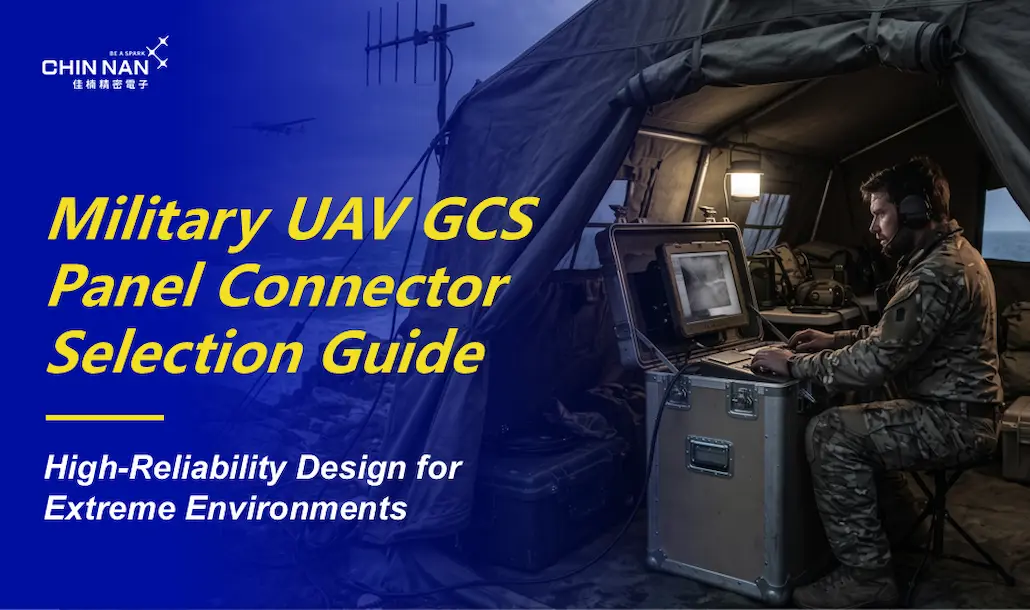
Military UAV GCS Panel Connector Selection Guide: High-Reliability Design for Extreme Environments
In modern tactical and military Unmanned Aerial Vehicle (UAV) systems, the Ground Control Station (GCS) serves as the critical terrestrial node for executing mission planning, Command & Control (C2), Telemetry, and Payload Data Links. For hardware R&D engineers and B2B procurement decision-makers, maintaining basic RF Signal Integrity (SI) is merely the starting point of the design phase. When equipment is deployed on high-salt-fog coastlines, subjected to extreme thermal cycling in deserts, or forced to endure continuous vehicular vibration and mechanical shock on tactical platforms, the true challenge for military UAV GCS panel connectors is maintaining stable RF, mechanical, sealing, and anti-corrosion performance throughout their entire service lifecycle.
Starting from the engineering decision-making chain, this article analyzes the potential failure modes of external RF interfaces on military UAV controllers when exposed to vibration, mating wear, temperature cycling, moisture ingress, and galvanic corrosion. Furthermore, we provide actionable design and validation strategies to help system engineers build a ground communication architecture that perfectly balances reliability and Total Cost of Ownership (TCO).
READ MORE
17
SEP.
2026
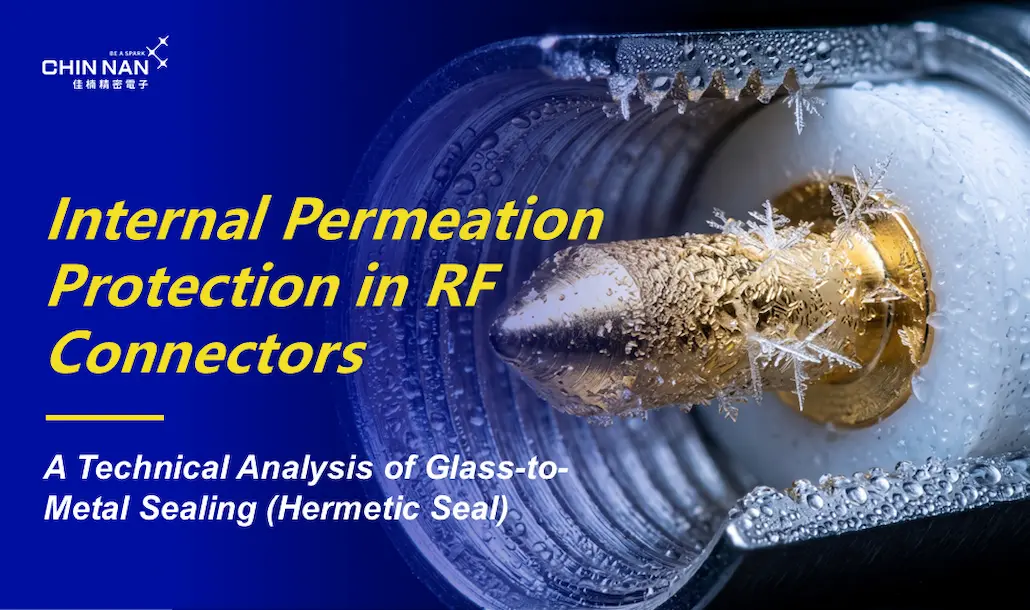
Internal Permeation Protection in RF Connectors: A Technical Analysis of Glass-to-Metal Sealing (Hermetic Seal)
In high-reliability applications such as military communications, Low Earth Orbit (LEO) satellites, 5G Non-Terrestrial Networks (NTN), and maritime radar, the failure of an RF system does not always stem from obvious external structural damage. Many long-term reliability issues may instead originate from microscopic leaks and material degradation within RF connectors, feedthroughs, or equipment bulkhead interfaces.
Some RF connectors featuring IP67 or IP68 protection ratings may still face an increased risk of moisture ingress after prolonged exposure to thermal cycling, high humidity, salt fog, or pressure variations. This is often due to the aging of sealing materials, interface relaxation, assembly defects, or the formation of micro-leakage paths. When moisture or corrosive contaminants penetrate the RF transmission structure, they can trigger the following failure chain:
Moisture Ingress → Condensation / Electrolyte Formation → Contact or Surface Corrosion → Alteration of Contact Resistance and Dielectric Environment → Impedance Discontinuity → VSWR / Return Loss Degradation → Increased Insertion Loss → Decline in RF System Reliability.
Therefore, for high-reliability equipment that requires long-term isolation from gases and water vapor, Glass-to-Metal Sealing (GTMS) is often employed to form a Hermetic Seal. Unlike conventional polymer seals, glass is an inorganic material capable of forming a low-permeability, permanent sealing structure. Consequently, it is widely utilized in vacuum bulkheads, electronic packaging, and high-reliability feedthroughs.
READ MORE
15
SEP.
2026
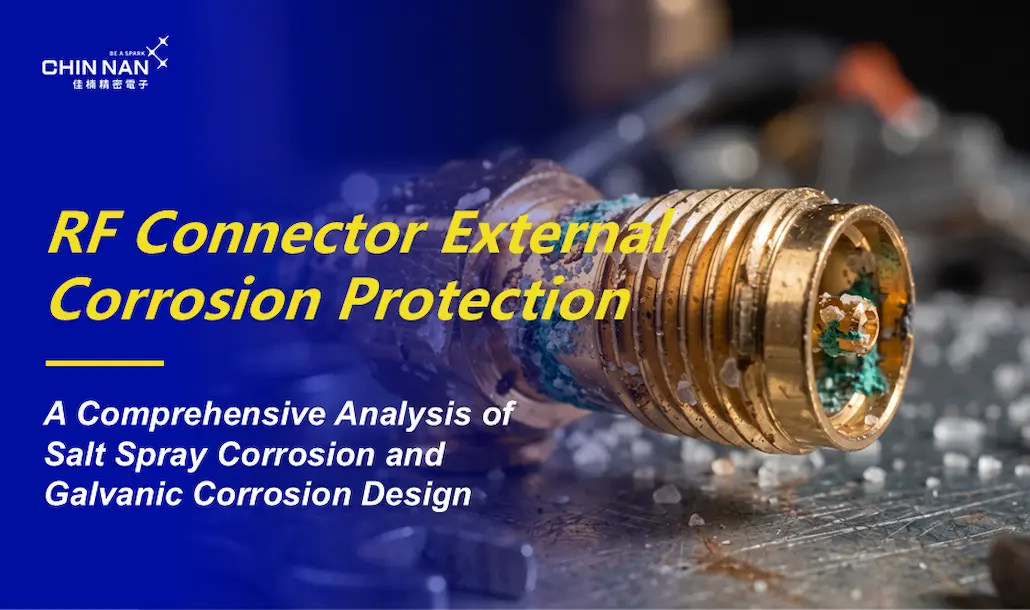
RF Connector External Corrosion Protection: A Comprehensive Analysis of Salt Spray Corrosion and Galvanic Corrosion Design
In high-reliability communication systems across extreme climates, maritime engineering, military unmanned aerial vehicles (UAVs), outdoor base stations, and 5G/6G Non-Terrestrial Networks (NTN), the environmental resistance of RF connectors directly impacts the long-term stability of the entire RF link. Many engineers and project managers often face a practical question: Even though the product has passed laboratory Salt Spray/Salt Fog Tests, why does it still suffer from oxidation, corrosion, unstable contact, or even RF performance degradation within months or years of actual deployment in coastal or high-salinity environments?
The core reason is: Salt spray resistance is not determined by a single plating layer, but is a system engineering effort resulting from the combined effects of materials, electrochemical compatibility, mechanical structure, sealing design, surface treatment, manufacturing process quality, and actual operating environments.
READ MORE
20
AUG.
2026
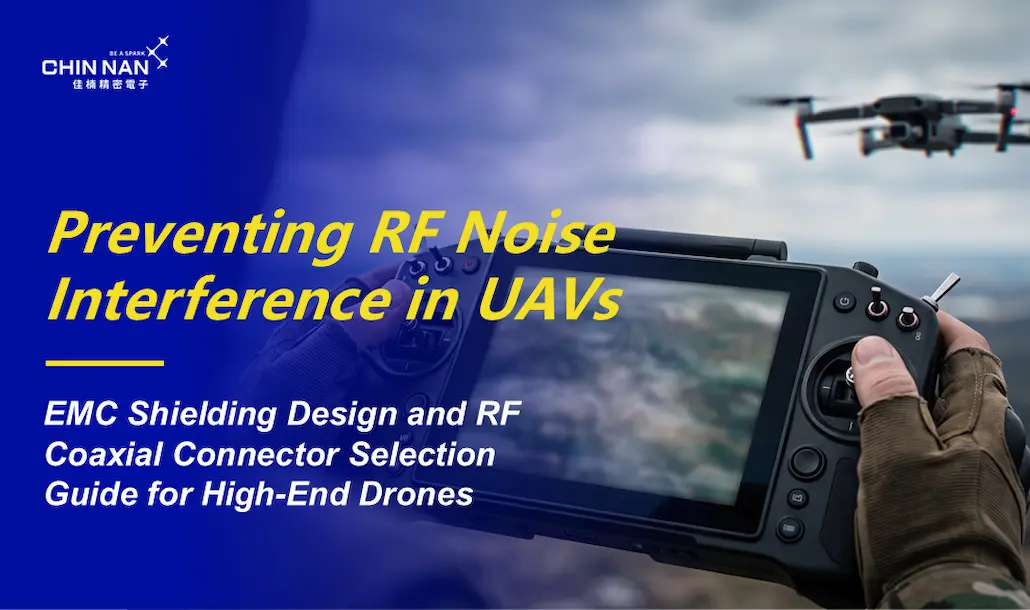
Preventing RF Noise Interference in UAVs: EMC Shielding Design and RF Coaxial Connector Selection Guide for High-End Drones
Modern Unmanned Aerial Vehicles (UAVs) have evolved far beyond simple flight platforms; they are now highly complex aerial computing and communication nodes. To meet the rigorous demands of military reconnaissance, offshore engineering inspections, 5G Non-Terrestrial Networks (NTN), and Low Earth Orbit (LEO) satellite communications, UAVs must integrate high-speed computing platforms, high-power motor drive circuits, Electronic Speed Controllers (ESCs), multi-band Global Navigation Satellite System (GNSS) modules, high-resolution video transmission links, and various sensors into extremely confined fuselage spaces.
This hardware architecture—characterized by "miniaturization, high power density, and multi-band coexistence"—makes Electromagnetic Compatibility (EMC) and Radio Frequency Interference (RFI) the most critical engineering metrics determining flight safety, positioning accuracy, link stability, and overall mission success. Within the complete RF transmission link, RF Coaxial Connectors, despite their small size, carry the heavy responsibility of transmitting high-frequency signals, maintaining outer conductor continuity, terminating cable shields, and providing structural chassis grounding.
If even a microscopic impedance discontinuity occurs in the shielding path between the connector, the cable, and the chassis, it creates a vulnerability for electromagnetic leakage or external noise coupling. Therefore, UAV EMC design cannot stop at evaluating a single component. Engineers must treat the "connector + coaxial cable + shield termination + chassis bonding + PCB ground" as an indivisible system-level shielding loop. This article explores the physical principles of shielding in coaxial interconnects from a system-level interference perspective, detailing structural protection designs for extreme environments, material and plating selection, and testing methodologies. It also provides actionable selection recommendations for Project Managers (PMs), hardware R&D, and B2B procurement decision-makers to effectively lower the Total Cost of Ownership (TCO).
READ MORE
15
AUG.
2026
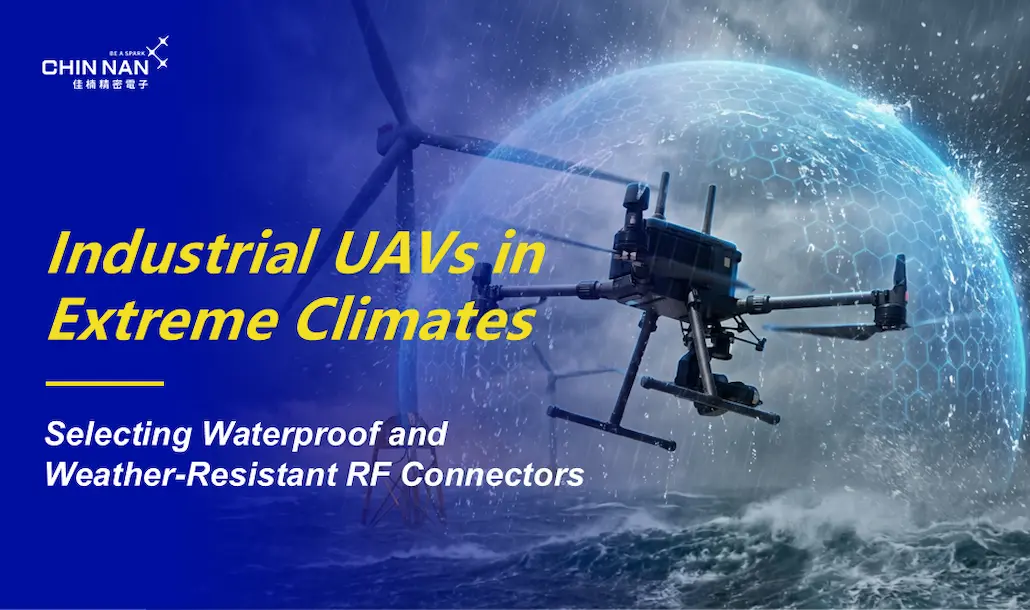
Navigating Extreme Climates: Selecting Waterproof and Weather-Resistant RF Coaxial Connectors for Industrial UAVs
Industrial UAVs (Unmanned Aerial Vehicles) are rapidly penetrating high-value operational sectors, including power line inspections, offshore wind farms, petrochemical plant monitoring, bridge structural assessments, smart agriculture, and maritime surveillance. Compared to commercial or consumer drones, industrial-grade platforms prioritize All-Weather Operation, unparalleled High Reliability, and long-term mission stability.
However, when engineering communication systems, many R&D teams heavily focus on antenna gain, RF module output, and transmission power, inadvertently neglecting the environmental reliability of the physical layer: the RF Coaxial Connector and its cable termination.
In environments characterized by high-altitude sub-zero temperatures, coastal salt spray, torrential rain, high humidity, and rapid Thermal Cycling, the RF connector is often the most vulnerable interface in the communication link. It is highly susceptible to seal degradation, corrosion, loosening, and contamination. If the sealing mechanism or material design is inadequate, the ingress of moisture, salt, or industrial pollutants can drastically alter localized dielectric properties. This leads to impedance mismatch, increased insertion loss, severe Return Loss deterioration, and a spiked VSWR (Voltage Standing Wave Ratio). In worst-case scenarios, it results in intermittent signal loss (dropouts) or complete mission abortion.
Therefore, for industrial UAVs executing prolonged inspection missions, R&D engineers and procurement teams must look beyond standard IP67 or IP68 ratings. True reliability hinges on evaluating the connector's sealing locations, mating states, cable-end encapsulation, corrosion-resistant plating, anti-vibration locking mechanisms, and comprehensive environmental testing parameters.
READ MORE
14
AUG.
2026
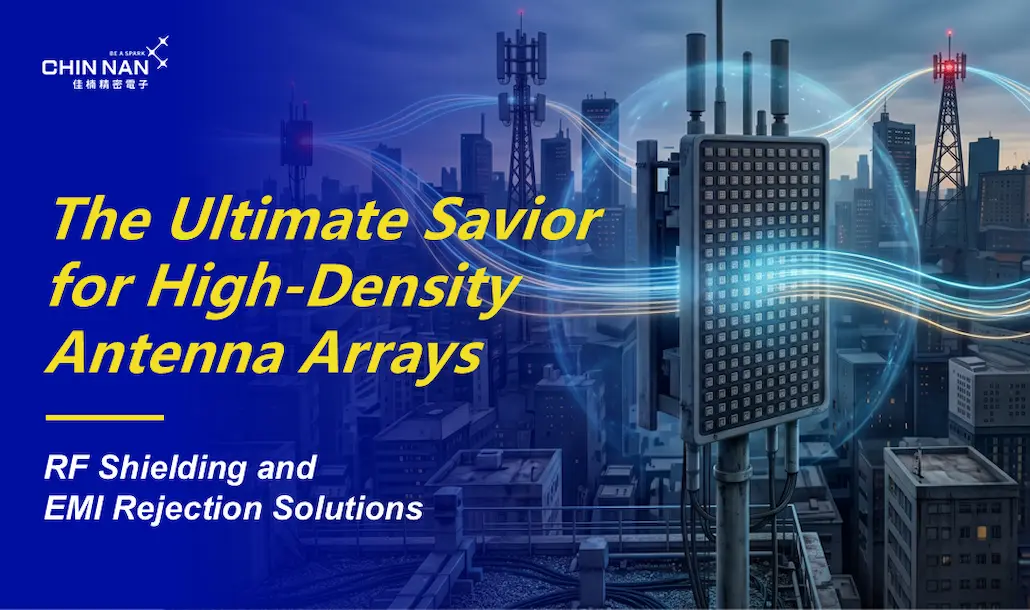
The Ultimate Savior for High-Density Antenna Arrays: RF Shielding and EMI Rejection Solutions
Driven by the rapid deployment of 5G NTN (Non-Terrestrial Networks), LEO (Low Earth Orbit) satellite communications, and next-generation radar systems, Massive MIMO (Multiple-Input Multiple-Output) and Phased Array antenna technologies have emerged as the critical infrastructure for high-bandwidth, low-latency transmission. However, when dozens or even hundreds of antenna elements and RF channels are densely packaged within strictly confined physical footprints, hardware R&D engineers and EMC testing professionals face an extremely formidable physical challenge: severe Electromagnetic Interference (EMI) and RF Crosstalk.
This is not merely a matter of laboratory testing noise. In actual outdoor deployments and extreme environmental operations, microscopic electromagnetic leakage can cause a system's Voltage Standing Wave Ratio (VSWR) to spike unpredictably, severely degrade Low PIM (Passive Intermodulation) performance, and ultimately trigger frequent signal dropouts alongside exorbitant O&M (Operations and Maintenance) costs. For RF system project managers (PMs) and B2B procurement decision-makers, understanding and integrating the correct RF shielding and EMI rejection solutions is the absolute prerequisite for ensuring the long-term reliability and favorable Total Cost of Ownership (TCO) of high-value equipment.
This technical column will delve into the underlying physical mechanisms of electromagnetic interference in high-density antenna arrays, providing a highly practical B2B guide on advanced electromagnetic shielding technologies and the strategic selection of SMA RF components.
READ MORE
13
AUG.
2026
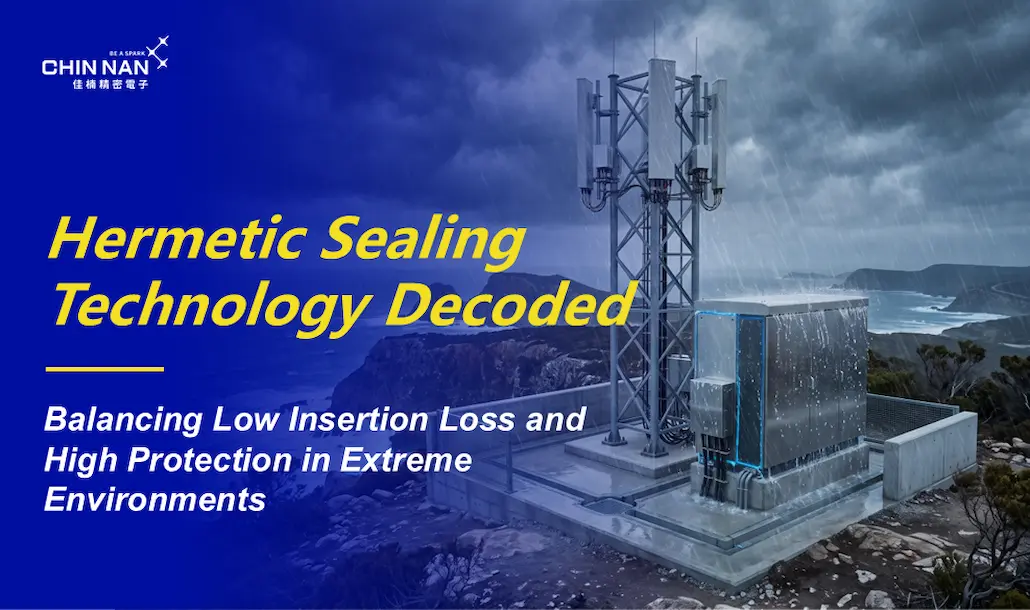
Hermetic Sealing Technology Decoded: Balancing Low Insertion Loss and High Protection in Extreme Environments
Discover how Glass-to-Metal Sintering in hermetic RF connectors prevents galvanic corrosion and VSWR degradation in LEO, UAV, and extreme environments.
READ MORE
01
AUG.
2026
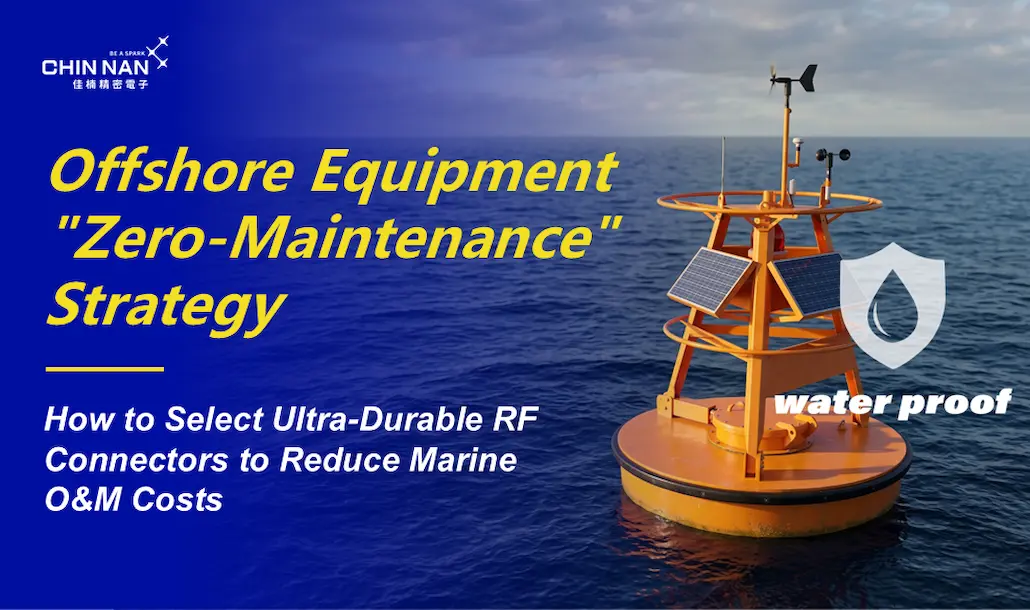
Offshore Equipment "Zero-Maintenance" Strategy: How to Select Ultra-Durable RF Connectors to Reduce Marine O&M Costs
In the deployment of deep-sea shipping, unmanned maritime equipment, and offshore infrastructure, the initial hardware procurement and construction costs are merely the tip of the iceberg. When this equipment operates far from the coastline, the true commercial test emerges: How can you ensure the system operates continuously without interruption in extreme climates and high-salinity environments?
In terrestrial or near-shore environments, rectifying RF communication anomalies usually only requires dispatching an engineer with spare parts. However, when an Unmanned Surface Vehicle (USV) or a deep-sea exploration buoy loses its signal in the middle of the Pacific Ocean, the cost of dispatching a specialized maintenance vessel and technical crew is often tens of thousands of times the value of the component itself. A standard RF connector failing due to salt spray corrosion can halt an entire exploration mission and expose multi-million-dollar equipment to catastrophic "loss of contact" risks.
READ MORE
31
JUL.
2026
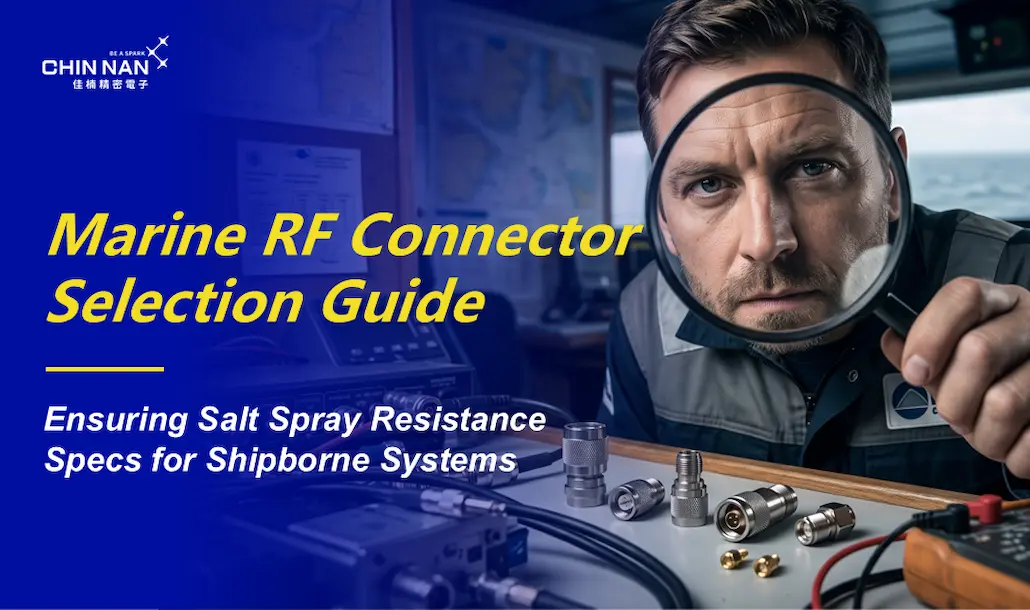
Marine RF Connector Selection Guide: Ensuring Salt Spray Resistance Specs for Shipborne Systems
A practical guide for B2B procurement managers and SIs on selecting marine RF connectors. Compare IP67 vs IP68, White Bronze plating, and salt spray test hours to maximize ROI.
READ MORE

Load More
Oops!
Data under construction
Our data is still being prepared. You can switch to other categories or sections to browse more information.
CONSULT FORM
Consultation List
Review your selected inquiry items. You can switch inquiry topics using the buttons below.
DELETE
Delete this item

This action cannot be undone. Are you sure you want to delete?
Go Back
Confirm Deletion


SUBSCRIBE TO NEWSLETTER
Subscribe to Newsletter
歡迎訂閱佳楠電子報,我們將會與您分享最我們的最新動態、產品與技術訊息
Your Subscription Info
Go Back
To unsubscribe, please
Click here
SUBSCRIBE SUCCESS
Successfully subscribed
您已成功訂閱佳楠電子報,敬啟期待我們的最新動態!
Return
CANCEL NEWSLETTER
Unsubscribe
請輸入您訂閱時所填寫的信箱,我們將協助您取消。
Your Subscription Info
Go Back
CANCEL SUCCESS
Subscription Cancelled
您的電子報已取消訂閱,期待您重新改變心意!
Return