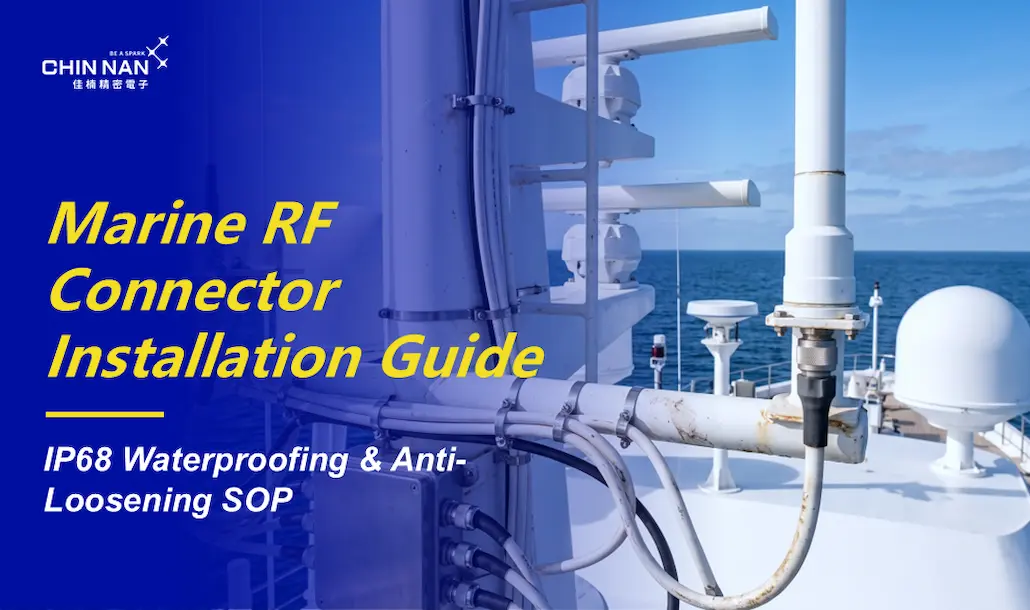
Q1: Why does my IP68 connector still rust after marine use?
A: IP68 only signifies "waterproofing" (preventing water ingress); it does not guarantee surface "corrosion resistance." If the connector's plating (like traditional nickel) cannot withstand salt fog, the exterior metal will still oxidize. We recommend upgrading to products with Tri-Metal (White Bronze) plating or stainless steel.
Q2: Is 240 hours a critical threshold for Salt Spray Testing?
A: Yes. Many high-end maritime applications require connectors to pass a minimum of 240 hours under the IEC 60068-2-11 standard. Achieving this ensures the connector can survive most offshore and high-humidity environments without early oxidation causing signal loss.
Q3: What is the difference between Hermetic Sintering and conventional rubber sealing?
A: Conventional rubber sealing relies on physical mechanical compression, which is prone to aging, degradation, or failure under pressure over time. Hermetic Sintering, in contrast, melts specialized materials to perfectly fuse with the metal housing at a molecular level. This creates a permanent, molecular-level barrier capable of meeting stringent vacuum-grade hermetic requirements.
Q4: Does anti-salt spray plating affect RF signals?
A: It can, especially in systems requiring Low PIM (Passive Intermodulation). Traditional nickel plating is magnetic and introduces interference. Conversely, Tri-Metal (White Bronze) plating is not only highly resistant to salt spray but is also non-magnetic, effectively preserving pristine signal integrity.
Want to explore how physical structures completely resolve leakage and corrosion? >> Discover the Key Technologies Behind Waterproof & Hermetic RF Connectors: Learn More